Residencies, 2010–2024
A.I.R. Vallauris 2024
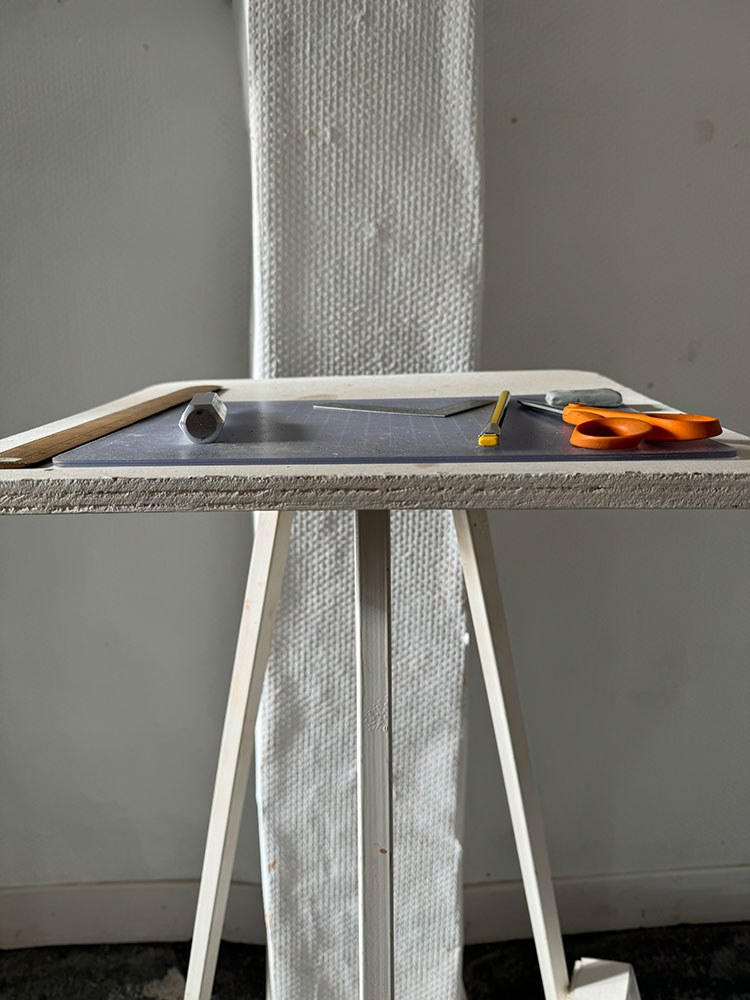
I was invited to work at a small artist residency in Vallauris France on the Côte d’Azur. This is the town where Picasso moved to create his ceramics, an art form that persists there to this day. I continued with my paper art though, as we had agreed, and set up my supplies upstairs in an old industrial building where the four of us artists shared work space. An early riser, I had several hours there to myself most mornings.
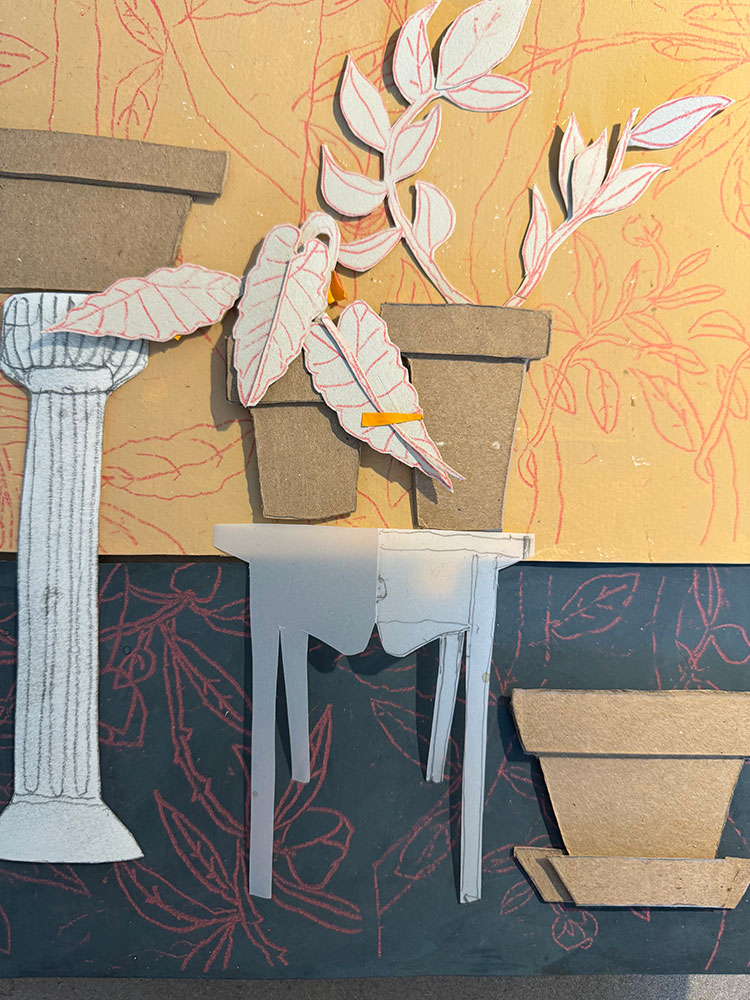
I began working on a series of still life collages, inspired in part by visiting a nearby nursery where potted plants were lined up for sale outside the door. Using vellum stencils, I experimented with the placement of elements in the composition. This is one of many appealing features in the collage process, the ability to assemble your picture piece by piece before committing to a final layout. The drawn wallpaper somehow crept onto the floor. A period American tavern table was the model for the one here.
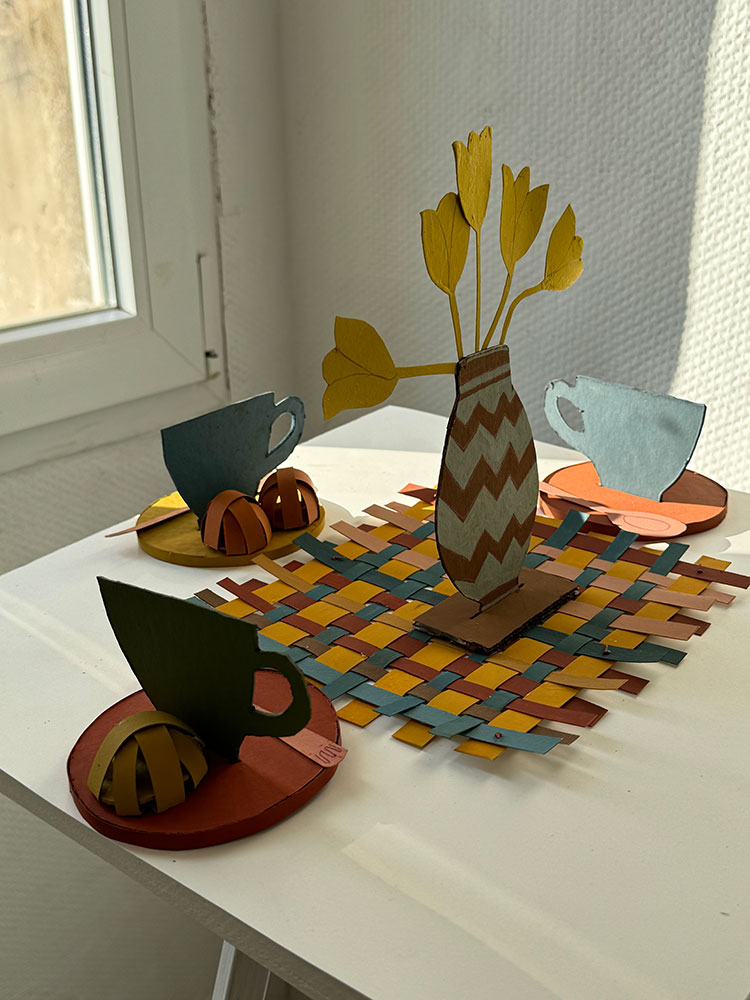
Being drawn to the kitchen and all that happens there, I have over time produced many table settings in paper. Sitting down for a meal is an occasion; it’s not just food that is being served, it is also a matter of how that food is presented and shared that deserves our close attention. A meal taken at the table serves up an opportunity for creating beauty and pleasure. I was making this little setting for our group exhibition. I slice slits in the saucer to support the standing cups.
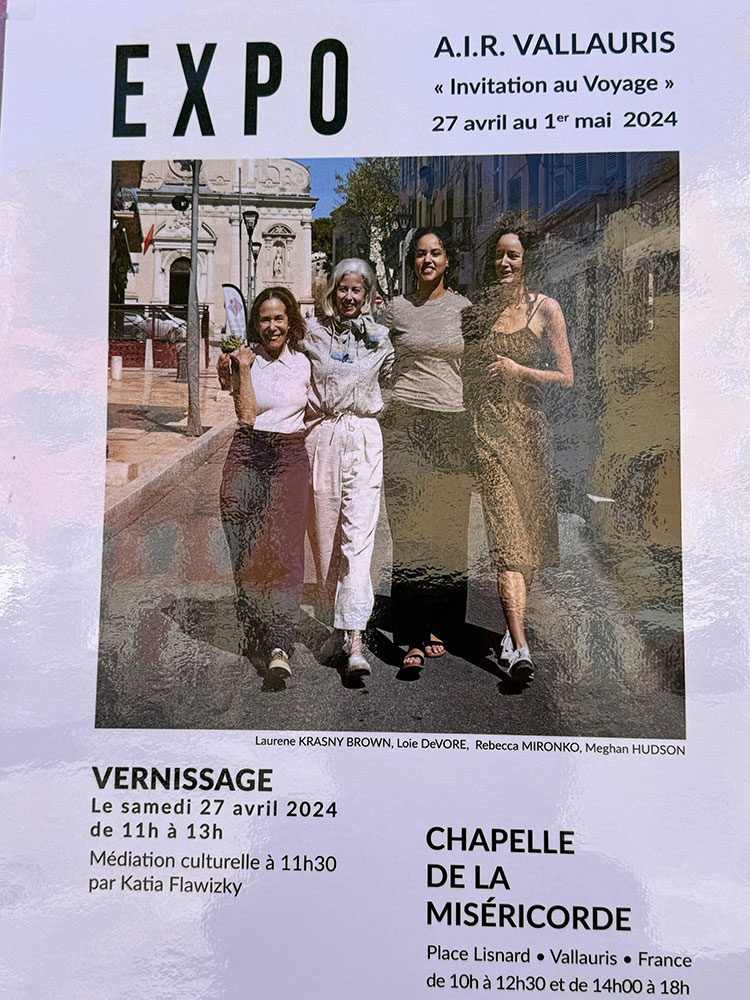
At the end of our residency, we installed a group exhibition in a local 17th century chapel. It was quite a beautiful interior. This notice for our show was posted all over Vallauris and for about two weeks we were minor celebrities. Upon entering the grocery store someone would exclaim: “Oh, exposition!” The street here leads to the Picasso Ceramics Museum. Having a show at the end of a residency adds pressure to an art making schedule and provides a tangible reward for your efforts.
Galerie Huit Arles 2022
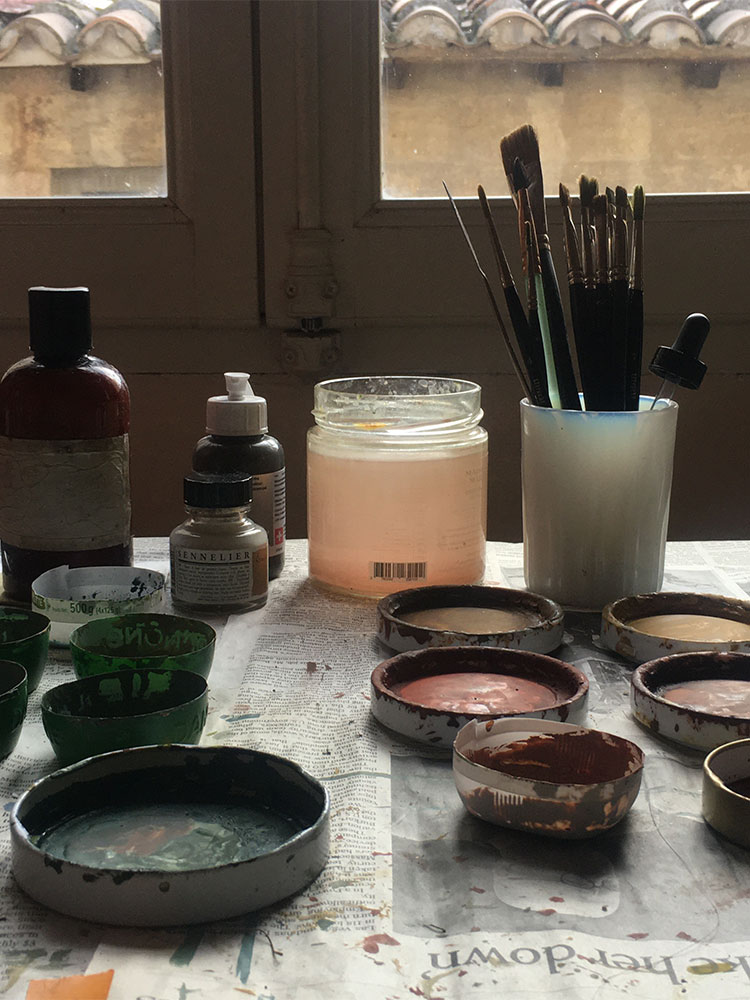
I was invited to work at Galerie Huit Arles, a combination artist residency, gallery and inn for several guests on rue de la Calade, an ancient stone paved street. My apartment was on the third floor and pigeon couples would roost on the building façades across the way. At first, working right in this living space seemed inhibiting, but I realized that I could integrate my paper objects and still lifes with what was already there, as if the whole space was one big installation.
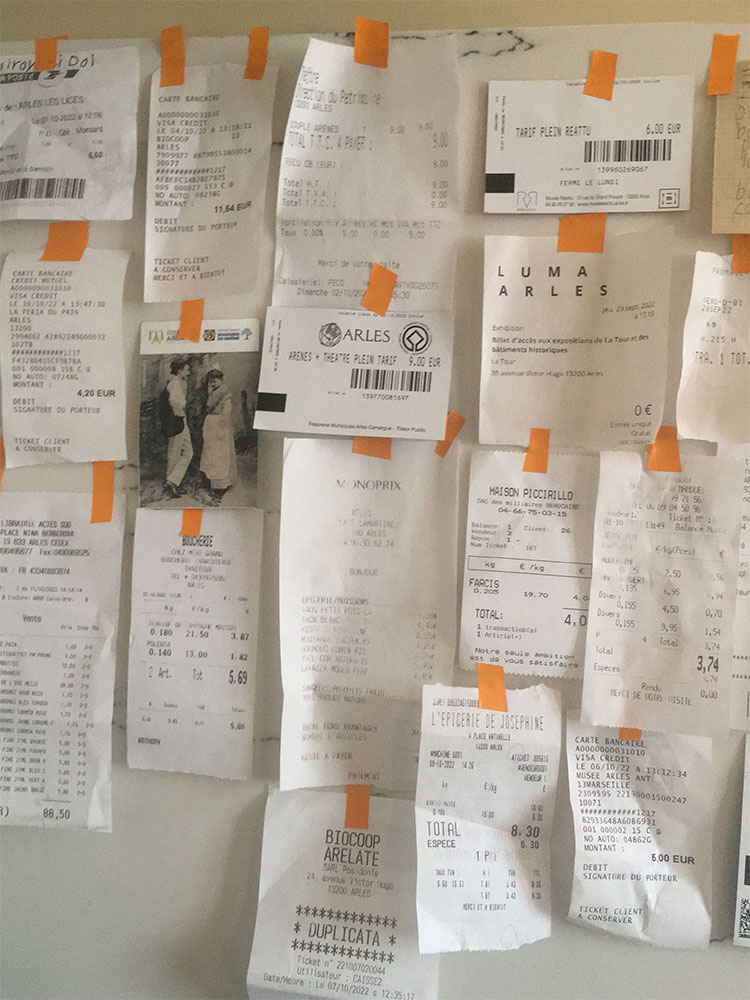
I always keep a tally of my out of pocket expenses when I’m workin away from home. My shopping receipts found safe haven taped to the kitchen wall in an ever expanding composition of their own. On occasion, our host would invite the three of us artists to join her rooming guests for wine in the house kitchen: besides me, there was a sculptor from Indonesia and a songwriter from Paris in residence. But I shopped regularly at a biweekly market that stretched out along maybe a mile of Arles streets.
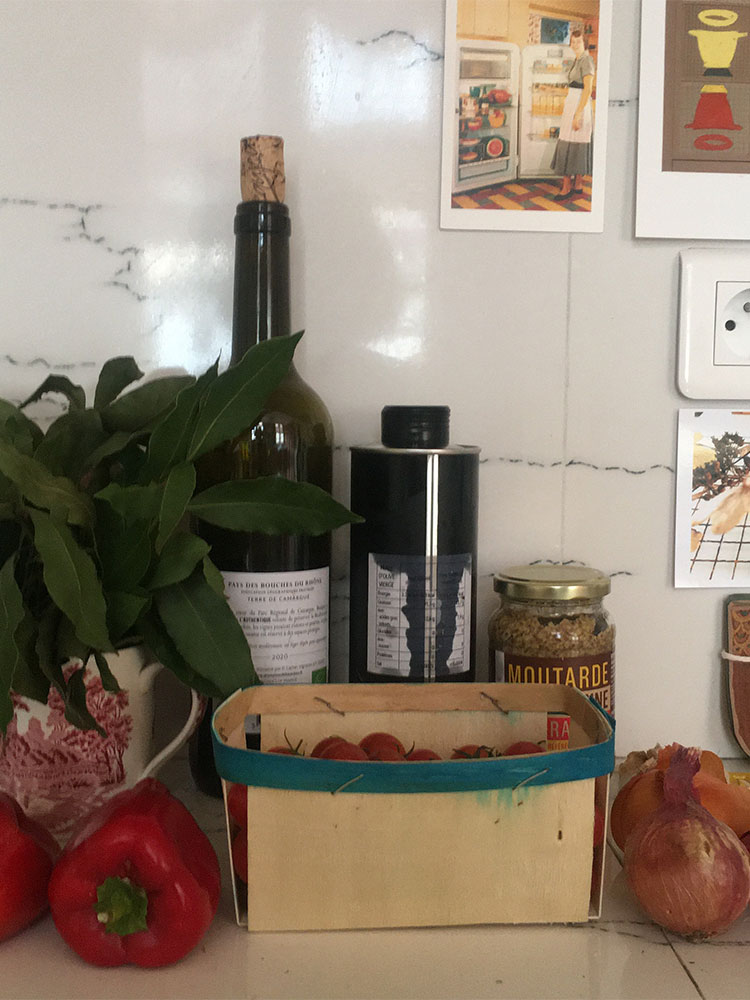
I liked the kitchen part of the apartment and, as I do at home, took advantage of the farmers market to sustain a still life on the counter. As food was used, new products were added to replace them, an ongoing organic source of aesthetic satisfaction. Huge bunches of sage and other herbs, fraises (even in October), all manner of fruit and vegetables, wheels of cheeses, Indian samosas, chickens fresh and roasted, fish, pastries and breads- on and on went the bounty.
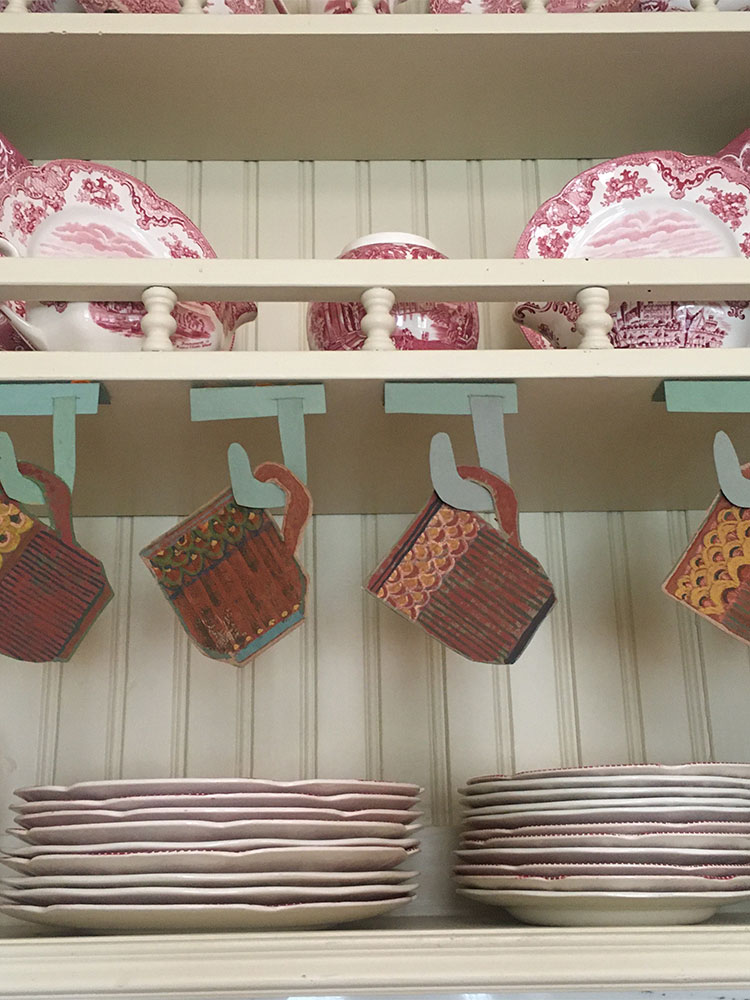
For the Open Studio I held at the end of my residency, guests were invited to visit the apartment where wall pieces and paper objects mixed with the kitchen ware provided by my host. I slipped a row of paper mugs along the shelf where her China export dishes were piled up. There is something amusing and whimsical about this infusion of pretend objects with their functioning counterparts. I am fascinated when my faux pieces disrupt and interrogate accepted reality. It creates a bit of unexpected fantasy.
American Academy in Rome 2019
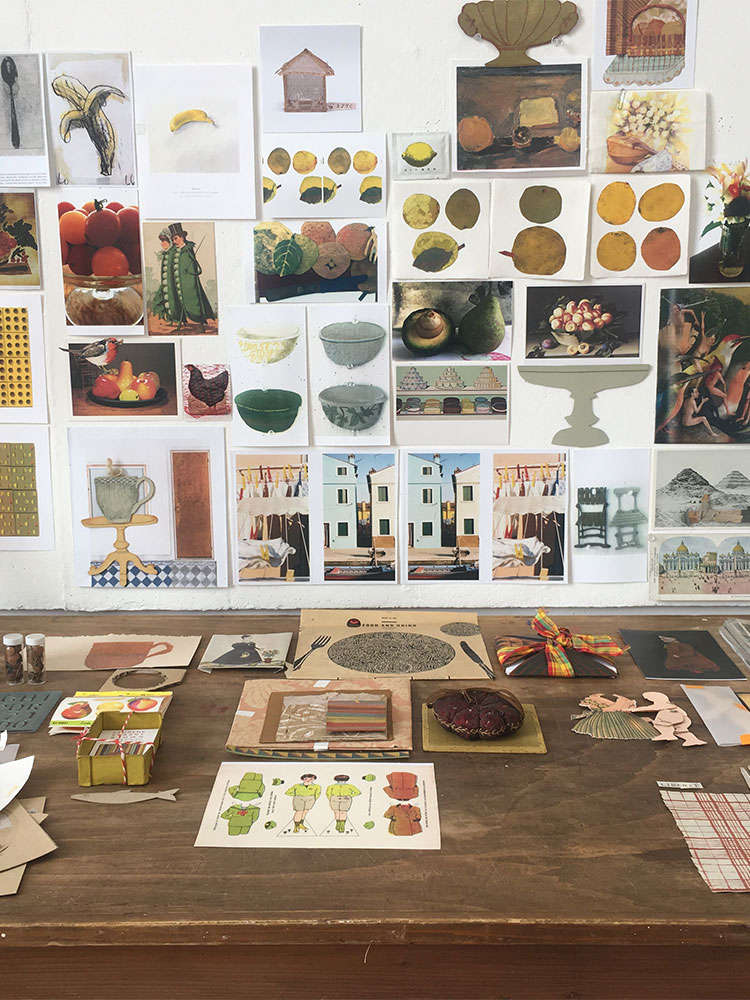
On two occasions I was invited as a Visiting Artist to work at The American Academy in Rome, the oldest American overseas center for independent studies in fine arts and the humanities. Being there is about joining the community of fellows and guests as well as doing your own work. Meals are a time for conversation, evenings often scheduled with lectures, the library open for research and the city of Rome beckoning just beyond the gates. I set up my supplies and references before beginning any art making.
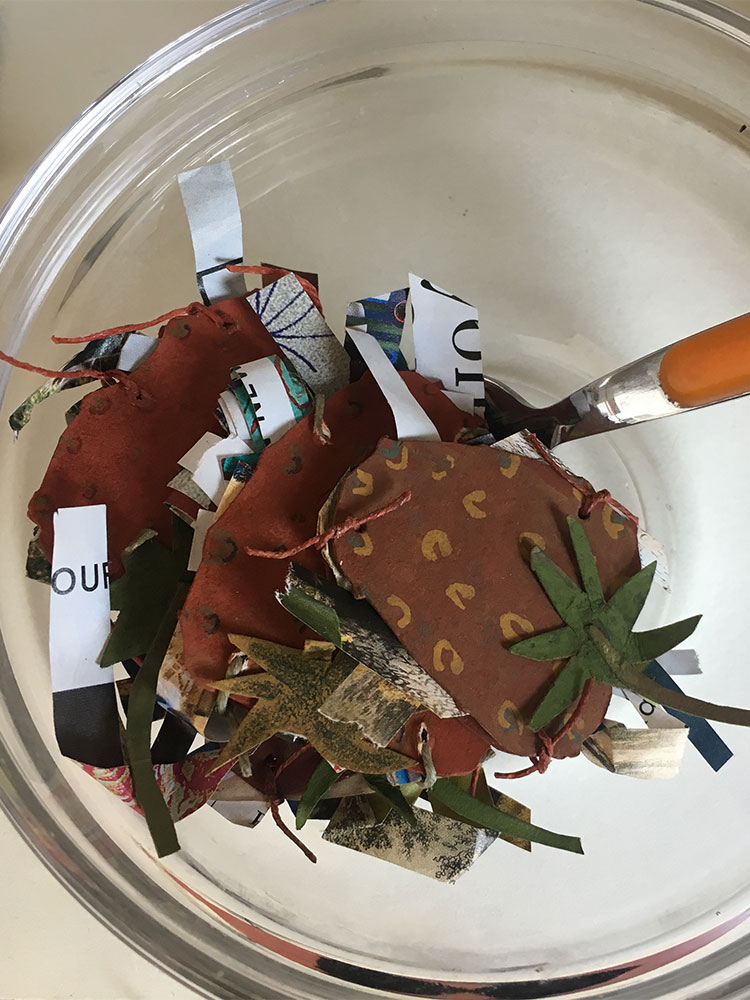
The Open Studio I was planning had a tentative title, Survival by Discrete Measures, with the preparation and storage of food provisions always in mind. For my own amusement, I laid out a plate of scrap stuffed painted berries. Mingling material culture from the real world with my pretend paper goods has continued to be a theme in my work. Watching a child bring a spoon of paper food up to their lips in this knowing joking way as if to dine is a bit of memorable magic.
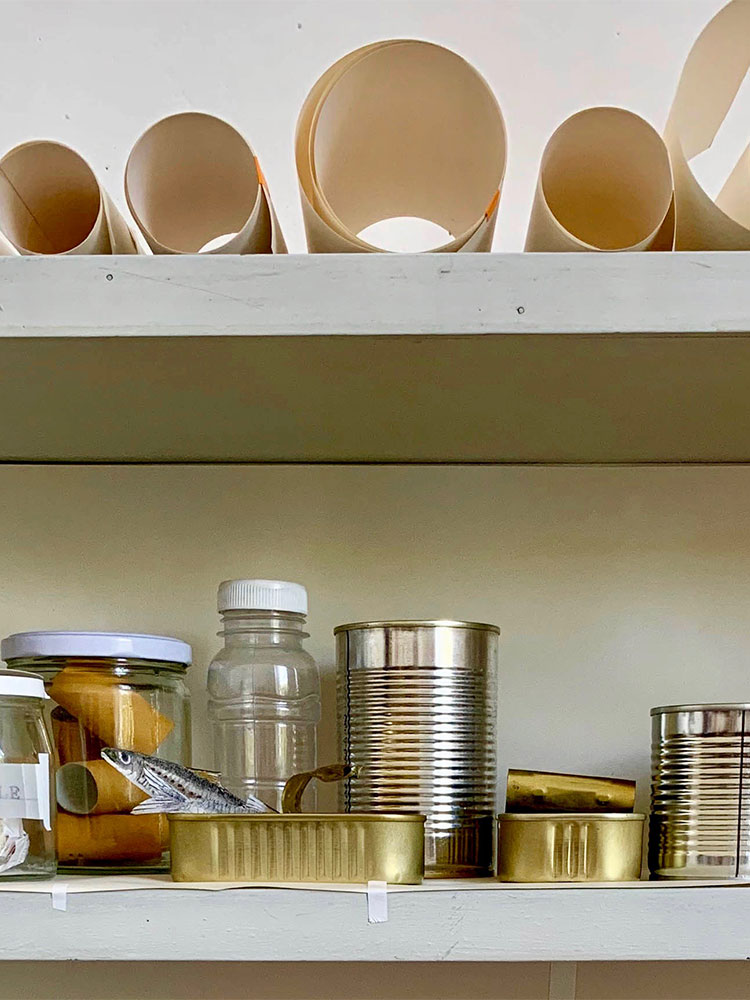
Here in the studio bookshelves I accumulated glass and metal food containers to establish a pantry. Every time I finished a tin of sardines, for example, the label was soaked off so that the form itself could be the focus. I also added a few labels of my own, as in the series of jars marked: Too Much, Too Little, Just Right. The row above holds remnants from the paper roll I found in an old stationery store and used to line the shelf interiors.
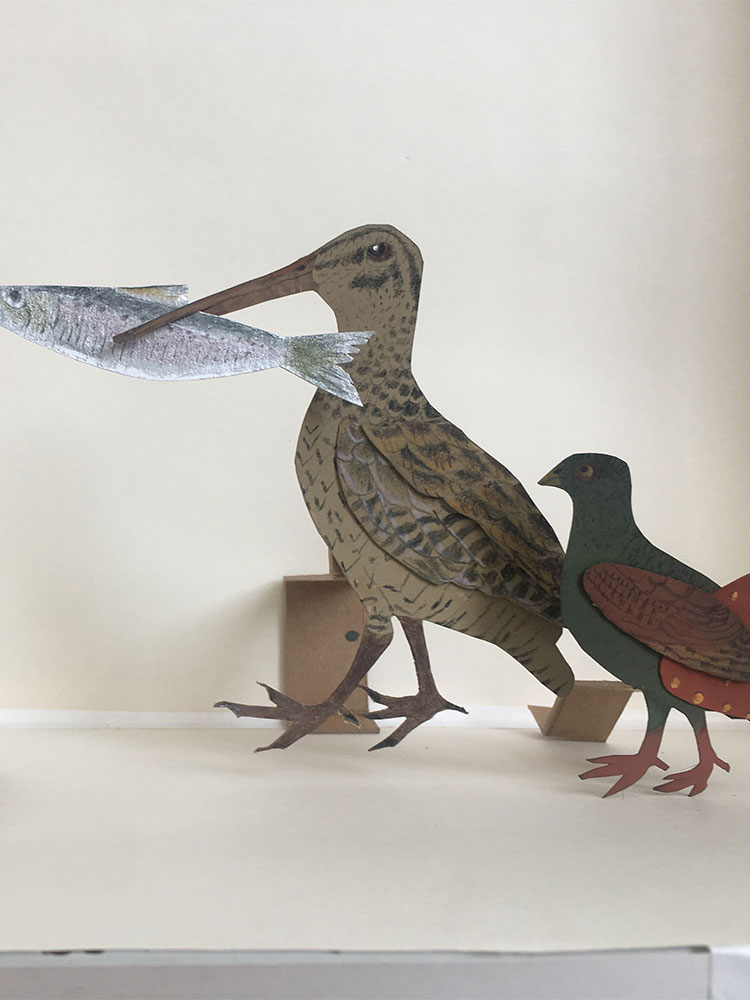
There was a menagerie of invited guests involved in this installation of food offerings. Each animal brought a gift of food they themselves would want to eat. A Moveable Feast.
Moulin à Nef 2018
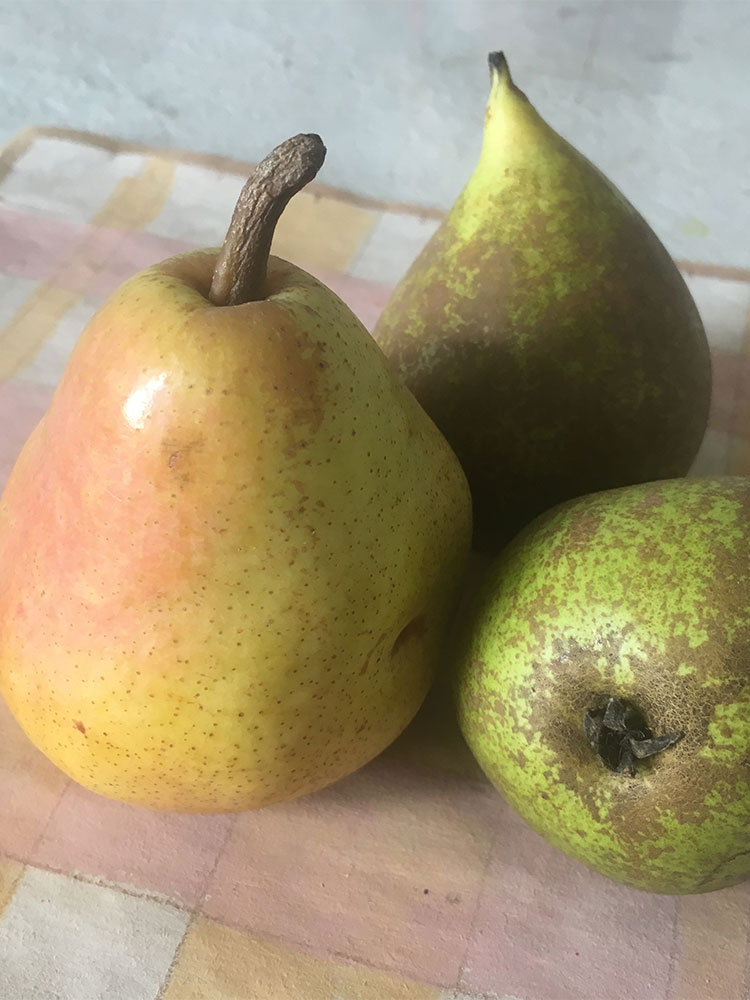
In the autumn of 2018 I traveled to Auvillar, a village in Southwest France, to spend a month at the artist residency Moulin à Nef, situated along the Garonne River. Four artists attended, each with their own studio space and agenda. We made weekly excursions to the beautiful food markets in Agen for our kitchen provisions. Being October, there were selections of pears that especially stood out to me for their curved shapes, leafy stems and mottled skin colors.
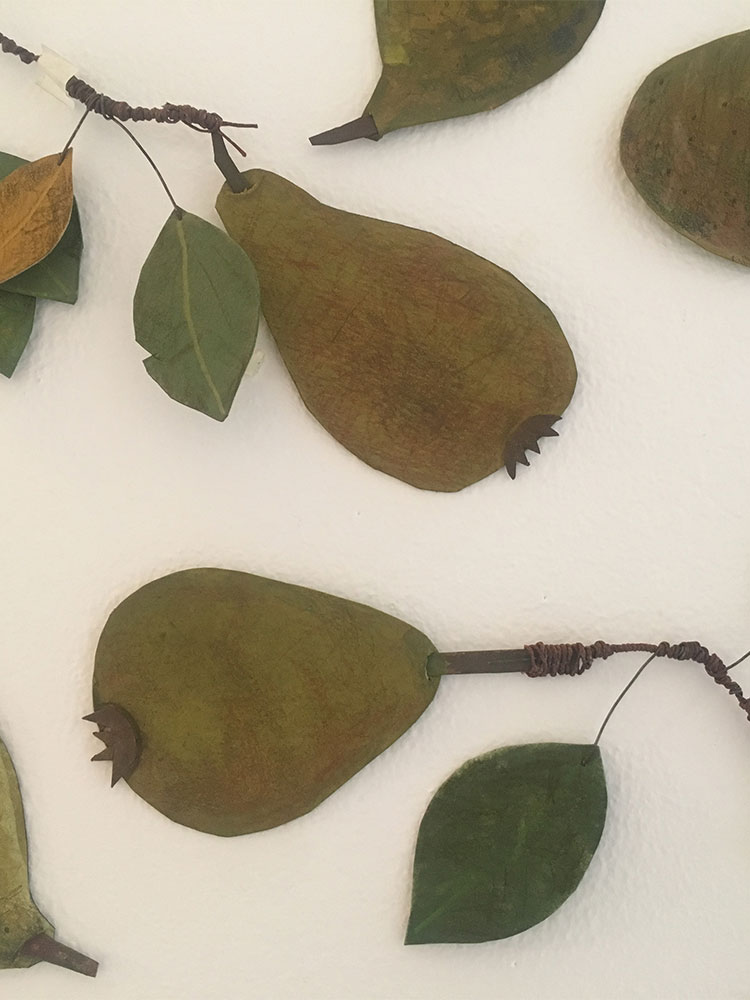
One long wall in my studio became the backdrop for an installation of pears I made in paper with gouache and colored pencil, their stems fashioned with wire and waxed linen thread to tie on leaves. I had to remind myself to first draw and cut out my paper pear before snacking on the model I was studying: draw first, eat later. As the weeks went by, I kept adding to and rearranging their pear wall until the day we held Open Studios at the end of our residency.
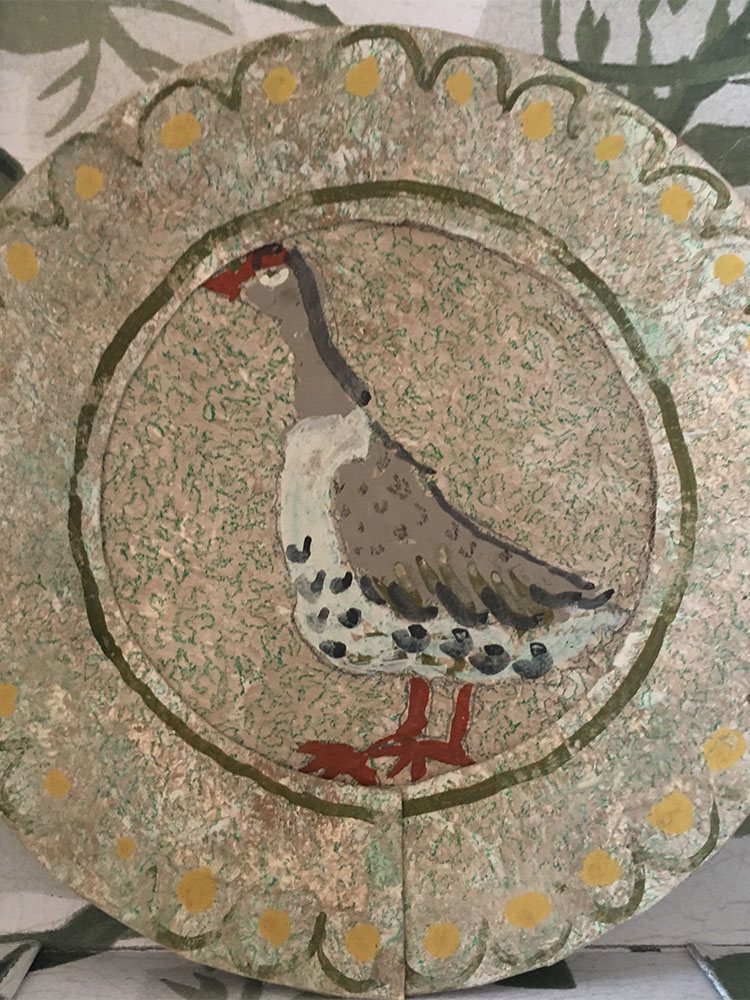
In this tiny village were two art museums, one of which was devoted to local handmade objects mostly donated by residents living in the region. The upstairs rooms were full of old faïence, tin or enamel glazed earthenware made from terra cotta clay. Every single piece was hand painted with a different figure, pattern or animal. It inspired me to create a series my own paper “faïence” plates, which I set into patterned trays for safe keeping. Each one harbored a bird in its center.
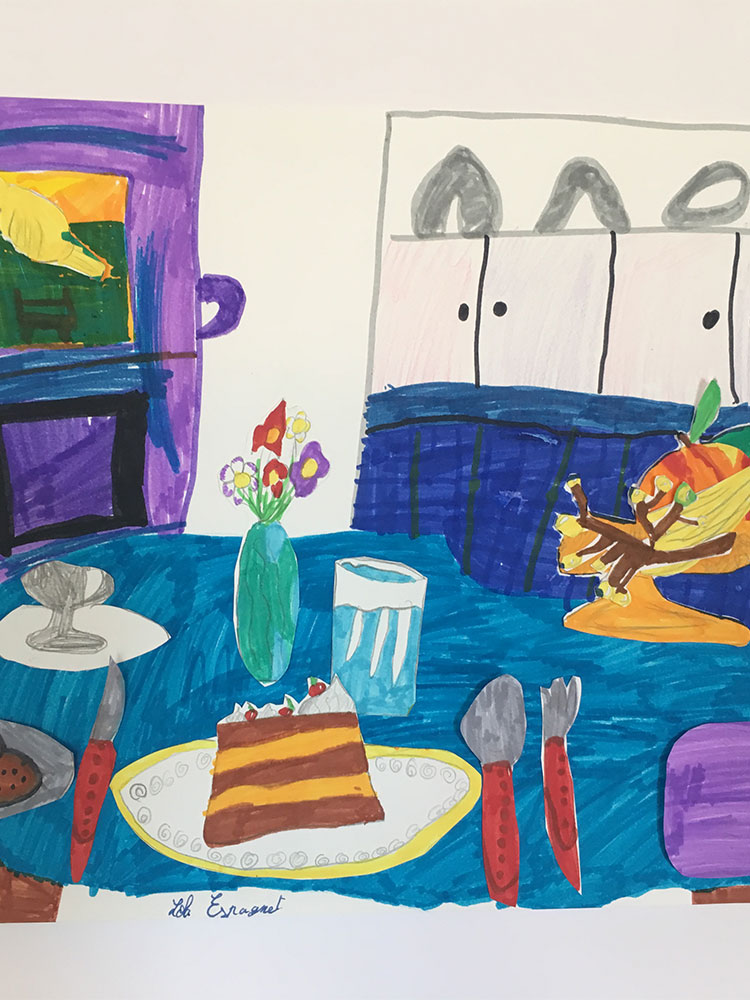
While in residence, I conducted an art workshop with a class of primary grade students, inviting them to make their own still life paper collages. I introduced them to wide-ranging examples of what constitutes a still life. Thankfully, their teacher was bilingual and came to my rescue when my French was lacking. These 10- and 11- year olds produced some wondrous pieces, as is pictured. I matted and presented their art along with my work. The children came with their families and showed off their collages, full of pride. It made my time there even more remarkable.
Virginia Center for Creative Arts 2017
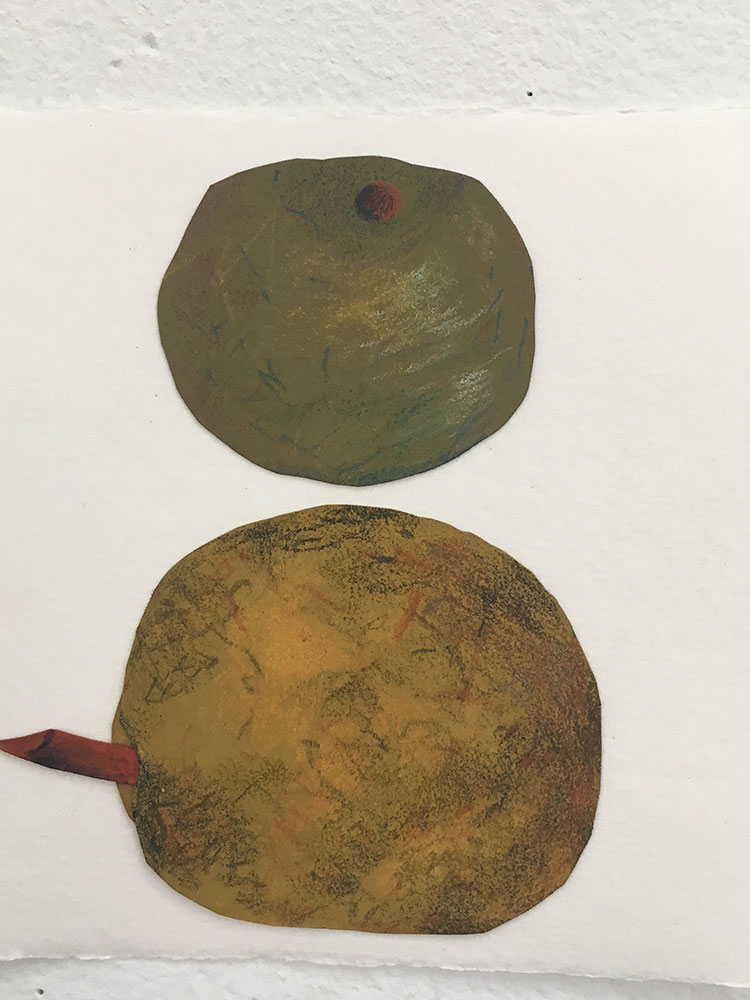
In early Spring 2017 I traveled by train South to spend the month of March at VCCA in Amherst Virginia. The genre of still life had finally erupted into my consciousness and I planned to use the time there to explore the idea of still life as portraiture.
For a subject matter to begin, I chose the orange, the fruit, inasmuch as it serves me fresh juice every morning, spreads its citrus fragrance, and presents itself beautifully, whether intact or cut open.
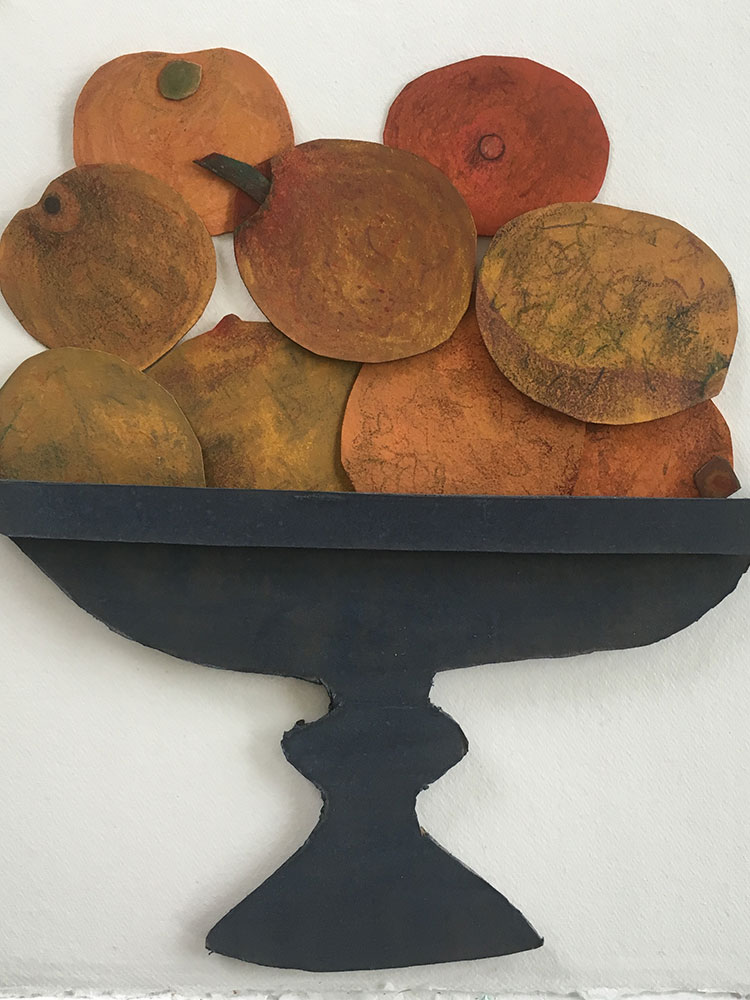
Using gouache and colored pencil, I invented a series of still life collages where oranges were the subject. I am a fan of footed dishes, as is shown here. For some reason, raising a dish up off the table also seems to elevate the status of whatever it contains. Every object created for collage by its very nature has dimension and sometime leaves a shadow behind, which ends up being a more convincing representation of itself. Making these things is a great source of satisfaction.
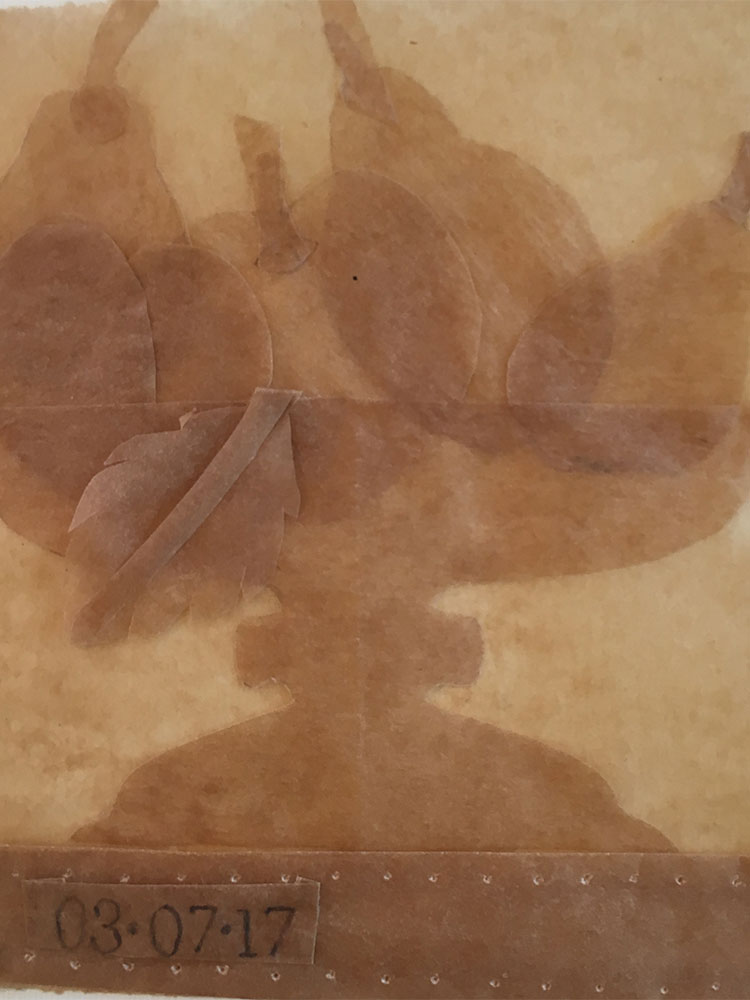
The first finished still life collage I made at VCCA, shown here, diverted from my usual pattern. First off, I tried using parchment paper, which offers a lovely translucence and tint. Parchment is a more challenging material to work with, however, not least because most adhesives leave some visible trace when you attach the elements to a base.
I also briefly diverted my attention to a different fruit, the pear.
A British writer attending the residency bought this work before I had a chance to
bring it home.
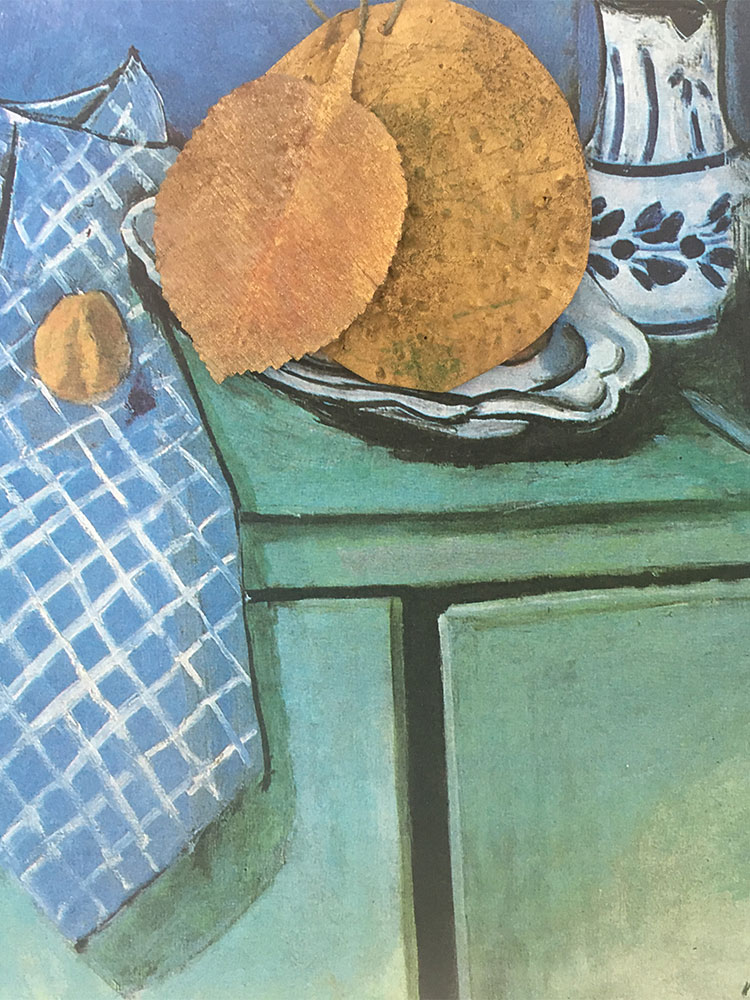
A bit irreverently, I played with some of my esteemed art references. Here I inserted my mighty oranges into a Cezanne still life composition. For our Open Studios, I presented all the orange-themed artwork made during my time there. I also decided to serve Mimosas, offering champagne, fresh orange juice or a mix of the two. My whole studio smelled of orange, resulting in a multi-sensory event.
CAMAC 2012
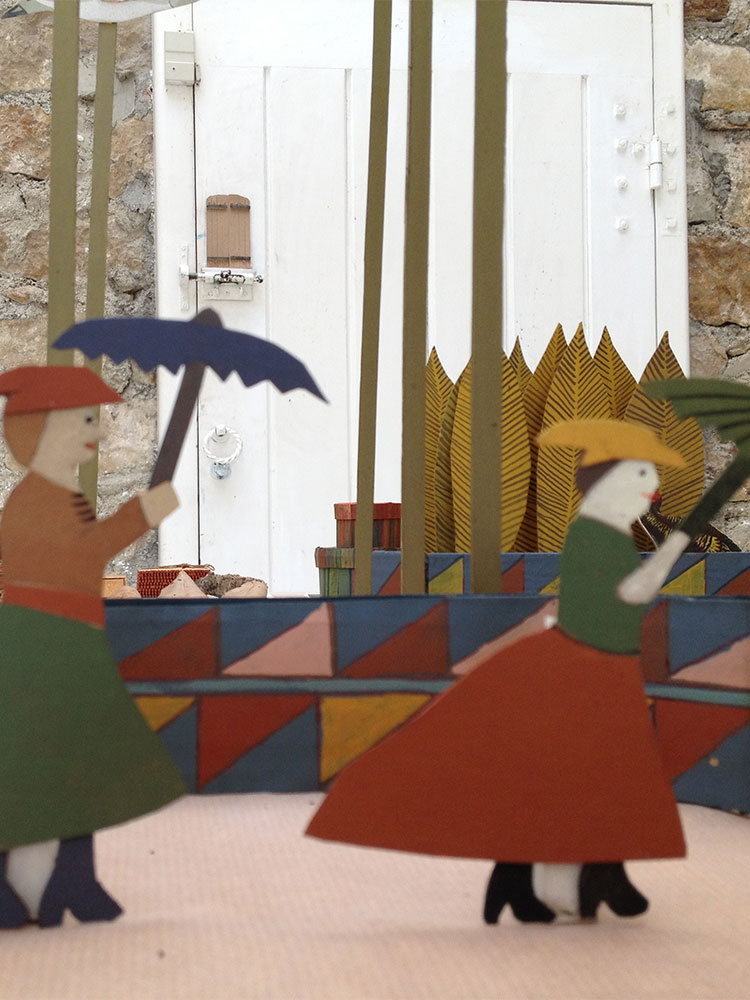
I spent a chilly but wondrous month at CAMAC, an artist residency that occupied an 18th century stone parsonage complex, along with guests from Algeria, Chile, Peru, Slovenia, Iceland and the USA. From the start, I dedicated a table in my studio to recreating the village there, Marnay-sur-Seine, in my own fashion, as the detail here suggests. The white door in the background opens up to the river Seine, where swans would languish along the green shoreline.
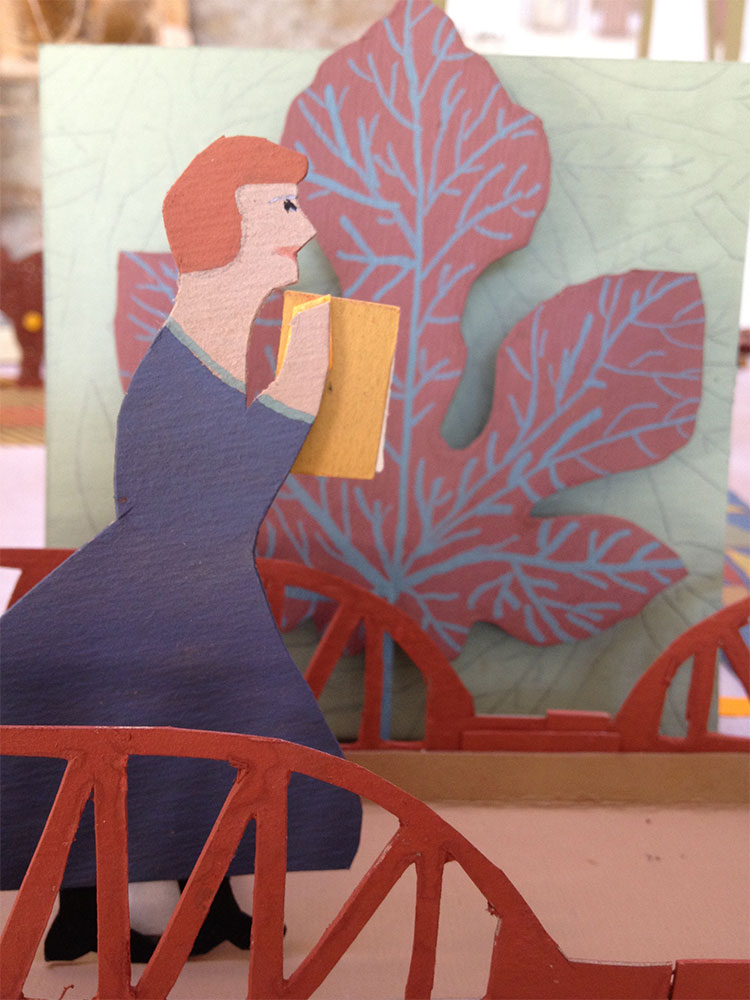
In another detail from the village installation I lined up leaf collages based on leaves I brought back to the studio from walks in Marnay. There were no businesses at all there at the time, only the church and stately town hall. The bridge I constructed resembled the Pont de Seine there, a grand name for a modest structure that did in fact cross the river. You could walk a few kilometers to Nogent-sur-Seine, the nearest rural town, passing the surreal pair of nuclear power plant cylinders
en route.
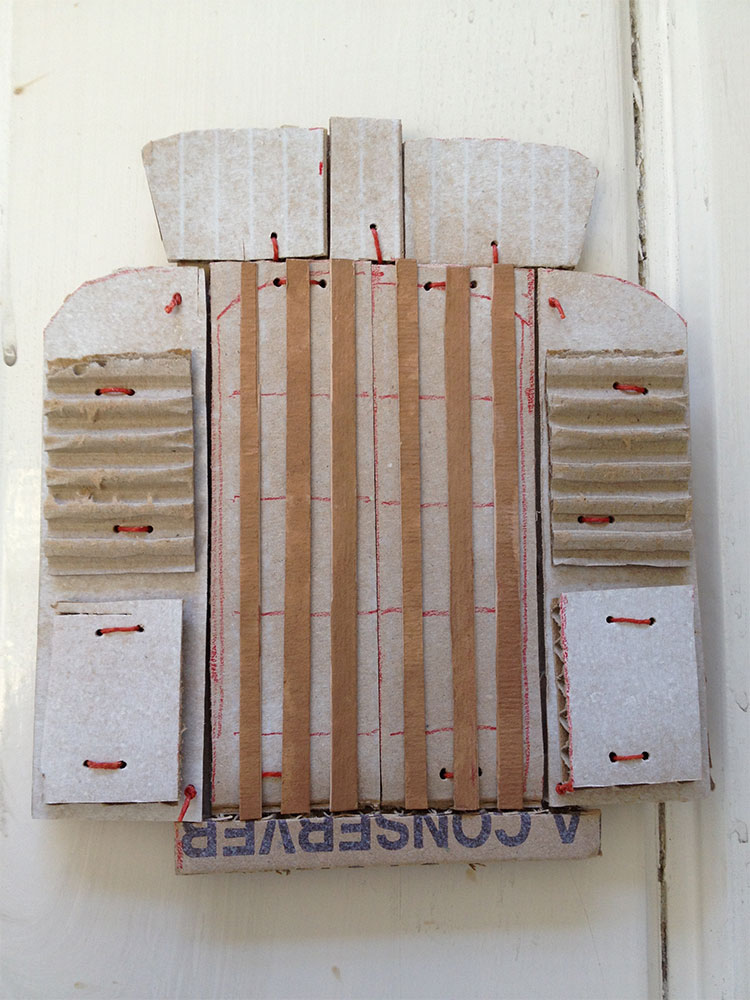
On my walks in the village, I took careful note of the ancient stone house façades lining the streets, each a little different from its neighbor. I began a series of paper windows, here shown with shutters, based on the may versions fashioned by residents. There was not one building that violated the aesthetic of Marnay; it was all of a piece, architecturally. The village also boasted being home to one of France’s twenty of so Botanical Gardens, where every plant
is identified.
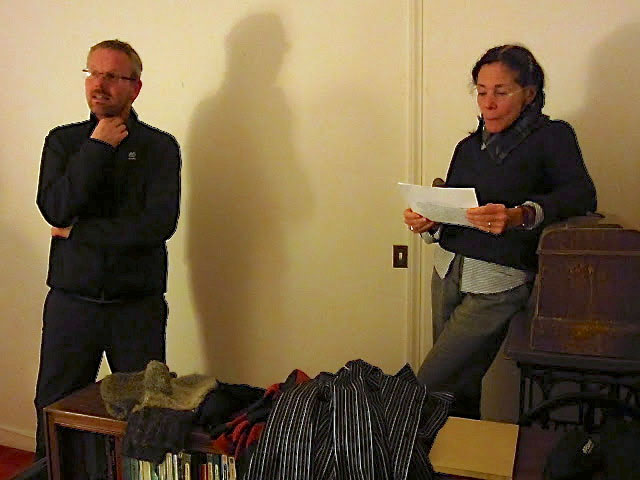
For our Open Studios we invited the public to join us in our presentation of visual art and of writing done there during the residency. Here I am reading the work of my Icelandic colleague Jon, shown here. Written material is easy to transport. With artwork, I learned to plan ahead so that finished pieces could be folded or reassembled upon
returning home.
Apothiki Paros Greece 2010
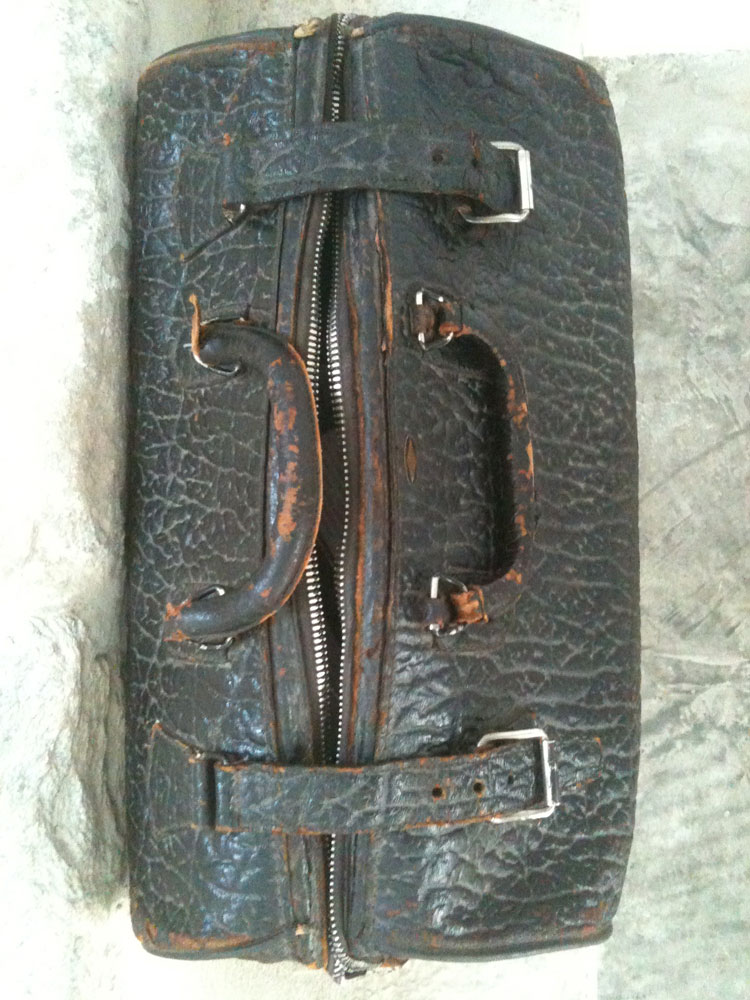
The first time I was invited to work elsewhere, I traveled to Paros, one of the Cycladic Greek islands. I packed one carryon suitcase with my clothes and personal effects and the other, an old medical tote shown here, filled with my art supplies: gouache, brushes, scissors and other tools, cutting board. This bag had to be checked and I worried about whether I would ever set eyes on it again. When it showed up on the baggage claim conveyor belt in Athens, I cried with relief.
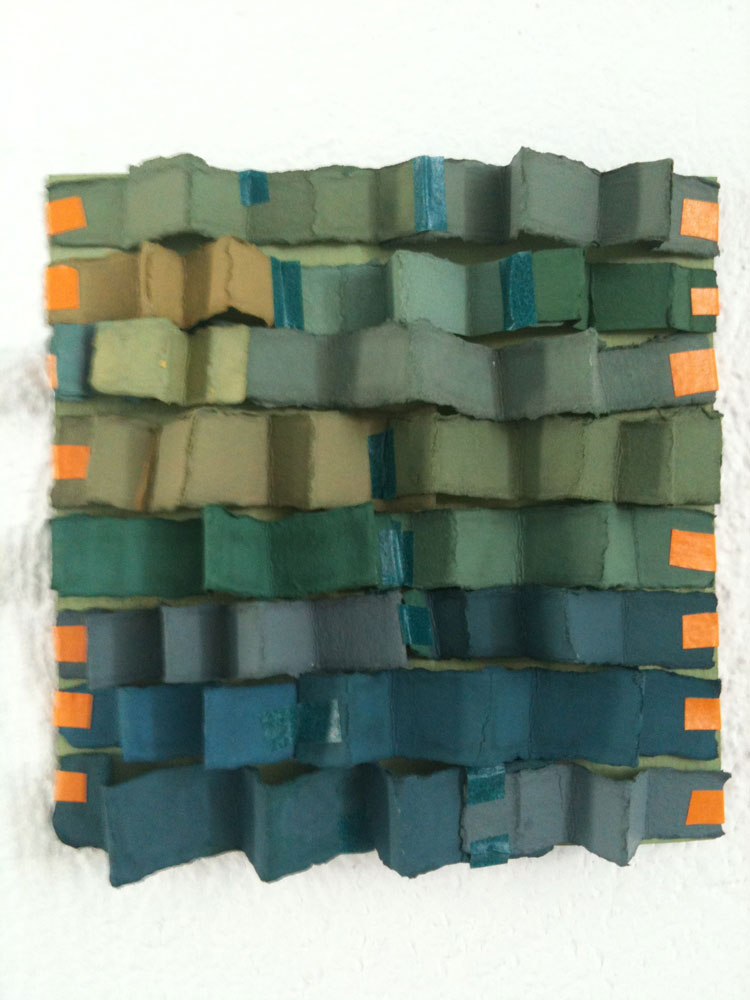
Every morning I walked along the Aegean Sea to the ancient Apothiki building where I worked. One morning I paid special attention to a tiny folded swatch of torn blue paper sitting on my work table. It reminded me of the waves along the sea wall, so I made more of these elements in shades of blue and taped them in rows to a square base. I awarded it the name Thalassa, Greek for the sea. The simplest whiff of stuff can sometimes set in motion a much loftier idea.
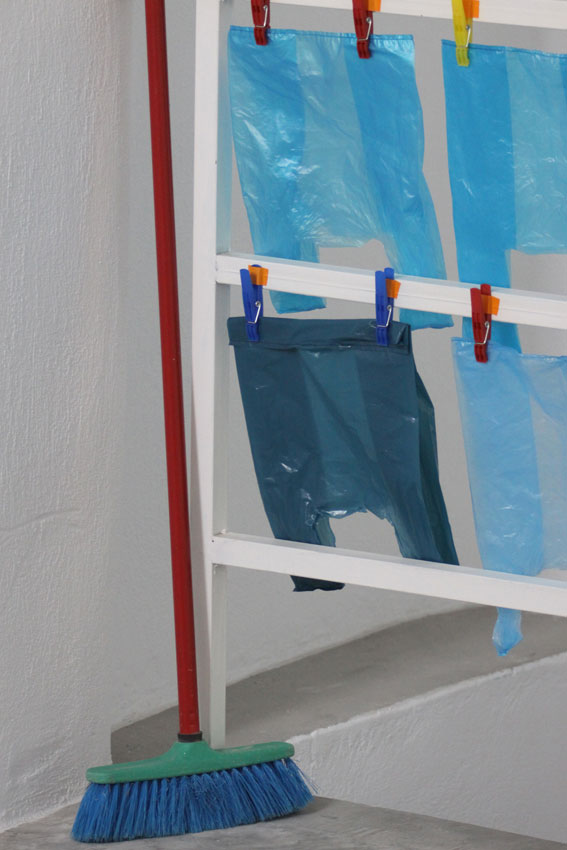
Whenever I propose a project for an artist residency, I always commit to hold a closing Open Studio to share the results of my efforts with the community. Here the theme was The Storage of Precious (and not-so-precious) Things, because the Apothiki where I worked once held olive oil and wine for safe keeping. An example of the not-so-precious entries is shown, with the plastic grocery bags given out everywhere flattened and hung upside down as if flexible sculptures in their own right.
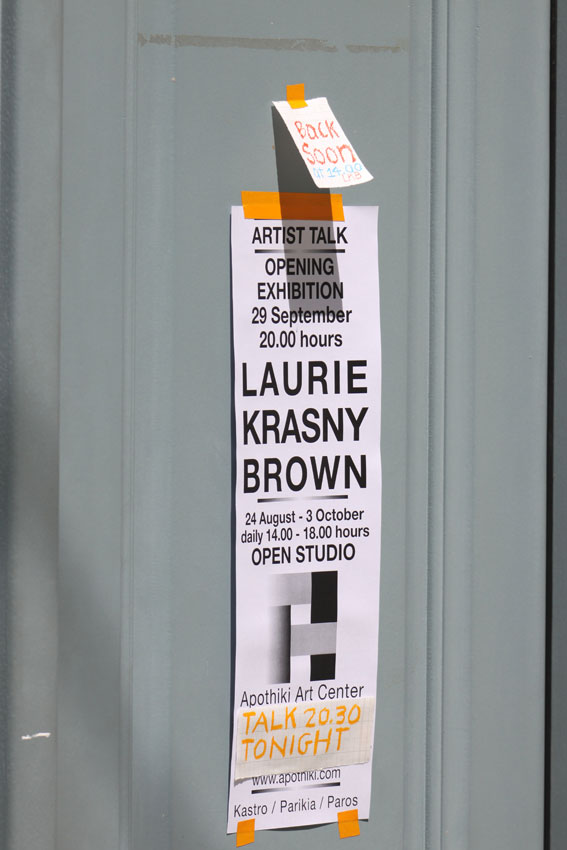
Every afternoon between 2-6pm I opened the studio to the public, unaware at first that this is the very time when most business stops for a long lunch and rest. However many cruise ship passengers and other international visitors to the island would come by, curious to see what I was doing. The Open Studio was advertised across the island and many island artists I had met attended this event. Residencies are ripe havens for finding not only new ideas but also new friends.